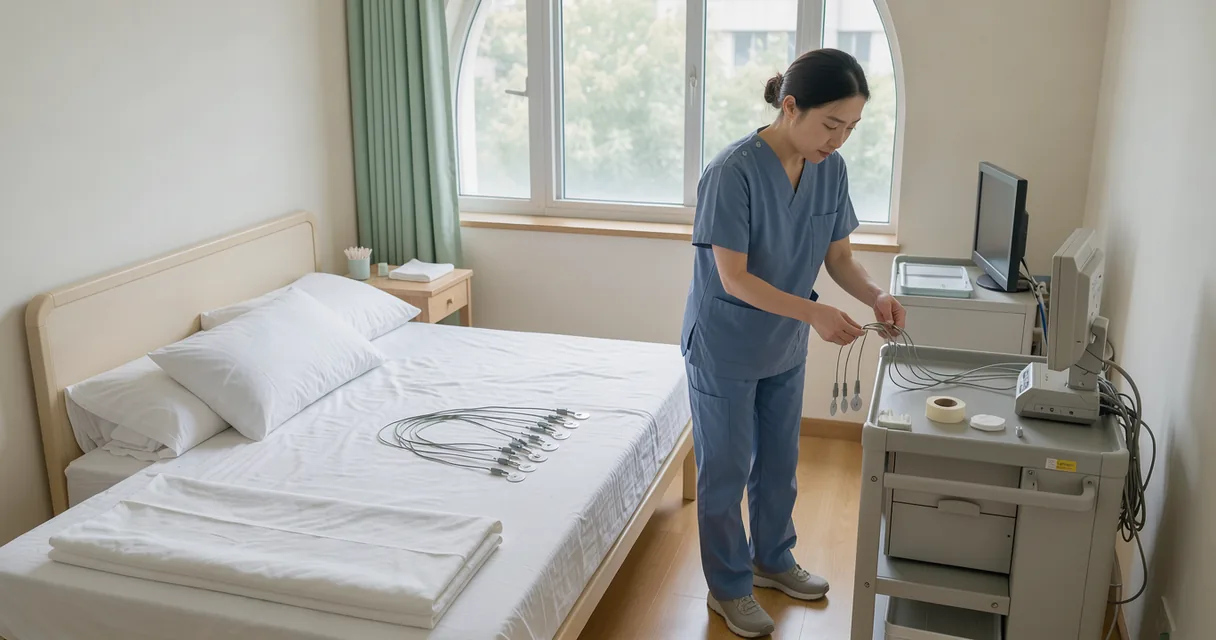
The overnight test of weight loss therapies
A falling weight leaves a whole night unaccounted for. I’m interested in breathing during sleep—and whether a better recording comes with an easier day.
Tirzepatide in the sleep laboratory
In SURMOUNT-OSA, tirzepatide reduced breathing events during sleep more than placebo in adults with obesity and moderate-to-severe obstructive sleep apnea. The trials lasted 52 weeks and included separate groups with and without PAP use. Their central measurement was the apnea-hypopnea index, or AHI: breathing events counted per hour of sleep.
I came to “weight loss therapies” thinking about scales. The sleep trial rewarded a different curiosity. A therapy associated with weight loss was being tested against a problem that had its own overnight record. That seems a much more interesting use of the word “therapies” than a competition over the largest percentage.
The sleeping body supplies a test of its own.
Breathing events, oxygen and waking life
The first sleep paper opens several doors. A later analysis of timing and oxygen burden connected the size of the sleep changes with achieved weight reduction. Another report examined sleep and quality of life as participants described them.
That double account of the night suits my curiosity. An instrument records something the sleeper may never notice. A questionnaire asks about the experience of living through the night and the following day. Both deserve space; their agreement would interest me, and so would a disagreement.
- The sleep trials put the breathing-event results beside the PAP groups.
- Oxygen and time examines why the early signal and the placebo comparison have different dates.
- The daytime account considers the participants’ answers about sleep, impairment and daily activity.
Treatment brings its own burdens
There is a less restful side to this subject. In a separate obesity trial, gastrointestinal adverse effects were the most common adverse events, mostly mild to moderate and occurring primarily during dose escalation. Those findings come from the weight-management setting; they do not measure how a particular person’s sleep will change.
I distrust relief described with the treatment’s discomforts quietly left outside the frame. The treatment trade-offs deserve a page beside the sleep findings. The reading list brings together the trial reports and the safety work used here.