Tirzepatide and obstructive sleep apnea
The trials separated participants by PAP use. That detail shapes what the breathing-event numbers can answer.
Two trial settings
SURMOUNT-OSA studied adults with obesity and moderate-to-severe obstructive sleep apnea. One setting involved participants without PAP; the other involved PAP users. Tirzepatide was compared with placebo over 52 weeks.
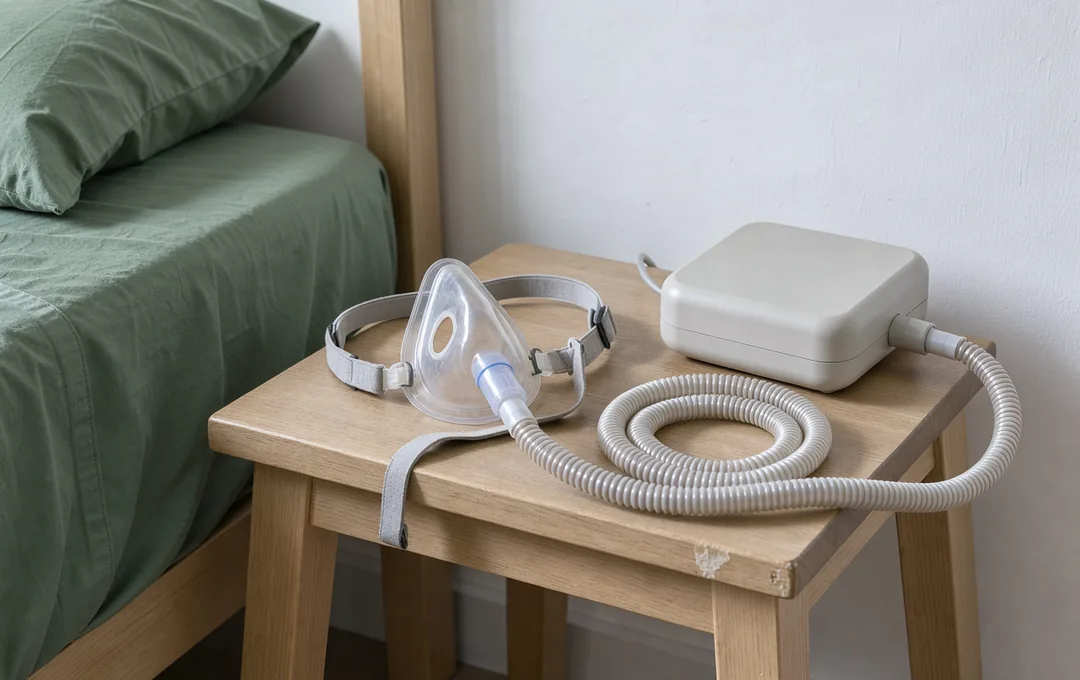
Seeing an existing form of support inside the research question pleases me. Equipment can have a place in the story of an effective treatment. Each group brings a different starting situation to the same research question.
PAP use distinguishes the groups at entry.
Changes in events per hour
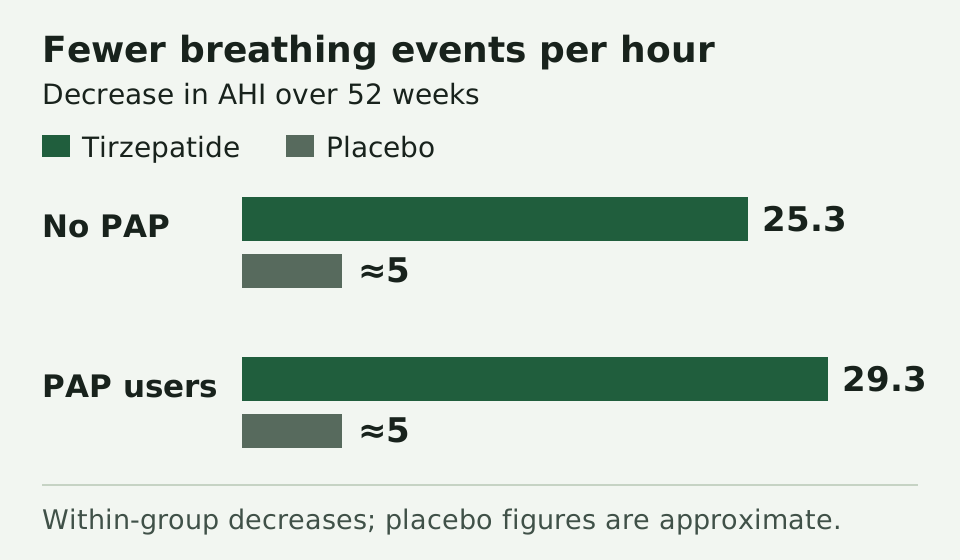
The AHI reductions with tirzepatide were 25.3 events/hour in the no-PAP setting and 29.3 events/hour among PAP users, compared with roughly 5 events/hour with placebo in each setting. These are changes within the treatment groups over 52 weeks. They are not the differences between tirzepatide and placebo.
The distinction matters even when the result is impressive. Subtracting a comparison group changes the question being answered. Seeing the changes together satisfies my urge to compare, with the approximate placebo figure still visibly approximate.
The chart gives each study setting its own pair of bars. Comparing the two tirzepatide bars directly would go beyond the randomized comparison within each setting.
The equipment question
The reported benefit in both PAP settings gives this result particular appeal. It leaves a separate question about replacing or withdrawing breathing support. A trial comparison between tirzepatide and placebo cannot, by itself, settle a decision about stopping another treatment.
The equipment disappearing has no special appeal to me. Benefit in both settings is already an interesting finding. The next investigation is in the recording: oxygen burden and the timing of change.